

Program
Driven by real‑world challenges in animal health, the Department of Large Animal Clinical Sciences at the University of Saskatchewan offers Master of Science (MSc) and Doctor of Philosophy (PhD) programs that prepare graduate students to advance knowledge in disease, reproduction, and animal welfare across livestock and specialty species. Through research in areas such as epidemiology, surgery, and food safety, students develop the expertise needed to improve herd health and strengthen veterinary practice.
Why choose USask for Large Animal Clinical Sciences?
- Access to our Animal Care Unit, which includes over 1,800 square metres of rooms for a range of species, including a level two disease containment area.
- Conduct field‑based studies at the 840‑hectare Goodale Research Farm supporting livestock herds.
- Use advanced imaging tools in the Veterinary Medicine Microscopy Unit to strengthen investigative work.
Quick facts
-
Expected length Thesis-based Project-option Course-based M.Sc. Clinical (project) 3–4 years M.Sc. Non-clinical (thesis) 2 years Ph.D. 4 years - Degree requirements
- Class delivery in-person
- Supervisor approval is required to apply
- Deadlines and admission details below
Groundbreakers in advancing large animal health
Pursue bold questions in livestock medicine, from herd‑level prevention to clinical interventions. Work alongside experts to redefine how large animal care supports sustainable agriculture and global food systems.
Large Animal Clinical Sciences master's and Ph.D. program
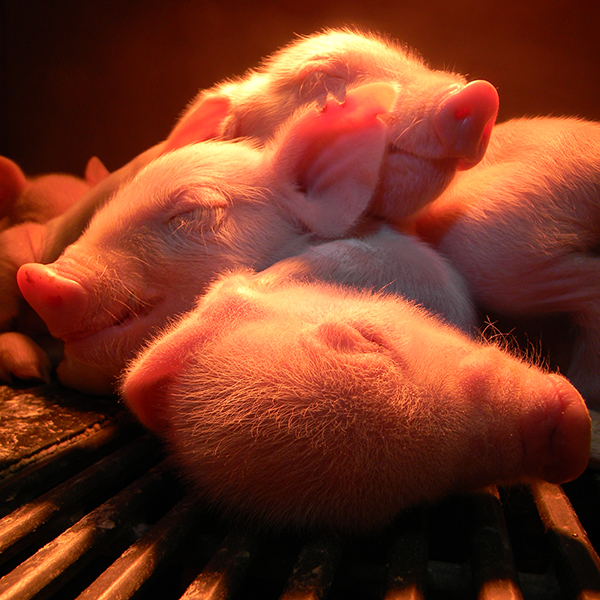
Master of Science - Clinical (project)
The Master of Science – Project (MSc-Project) is a less research-intensive degree done with a clinical residency program. Completion of a research project of appropriate size and scope is an important component of this degree and is required of all students. The MSc-Project degree is non-thesis, but students must complete at least one research project or experiment that results in the equivalent of a peer-reviewed quality publication. A submission-quality manuscript must be prepared but it does not need to be submitted prior to graduation despite advantages of doing so.
Remote Swine Residency
This concentration was developed specifically for veterinarians with degrees from non-accredited universities (i.e foreign-trained) who are Canadian citizens or Permanet Residents of Canada. Admission to this program requires direct application to the department. Clinical training will occur remotely in collaborating swine practices with an approved veterinary co-supervisor.
Master of Science - Non-clinical (thesis)
The Master of Science (MSc) thesis-based degree requires the preparation and defence of an MSc-level thesis. This can be either a traditional or manuscript-style format and includes at least two independent and robust research chapters. The research chapters are the equivalent of publishable papers and require the student to be involved in at least two research experiments or separate analyses of a larger dataset that are related to a common theme.
Doctor of Philosophy
This is a thesis-based program that requires the preparation and defence of a PhD level thesis. The format is similar to that of the MSc thesis, except that it includes at least three, and generally four or five research chapters, which are the equivalent of publishable papers. This would require the student to be involved in at least three research experiments or separate analyses of a larger dataset that are related around a common theme.
Research supervisors
Before applying, you must have approval from a faculty supervisor, as admission is not possible without one in place. Contact a faculty member whose research aligns with your interests and share your academic background and research goals. If they are accepting students, they will instruct you to begin a formal application.
| Name | Research areas |
|---|---|
| Equine gastrointestinal surgery, equine laparoscopy, anastomotic healing | |
| Computer-assisted ultrasound image analysis, low dose insemination, semen cryopreservation, fertility of frozen semen, breeding-induced inflammation | |
| Cattle lameness, bovine infectious disease, clinical pharmacology | |
| Food animal reproduction: uterine immunity and fertility; Novel immuno-modulation therapies; Estrus synchronization; Oocyte maturation; Semen quality; Cryopreservation | |
| Swine health | |
| Zoonotic diseases, public health, epidemiology | |
| Beef cattle production health, vaccination and nutritional management for herd productivity | |
| Swine health, porcine circovirus type 2 (PCV2), fetal immunology, post-natal health of swine | |
| Bovine mastitis and other dairy cattle diseases | |
| Equine acupuncture, advanced reproductive techniques, subfertility/infertility in mares and stallions | |
| Animal behaviour, physiology and metabolism to optimize the balance between animal welfare, health and productivity | |
| Swine behaviour and welfare | |
| Equine surgery | |
| Epidemiology, food animal medicine, zoonotic protozoa, livestock management | |
| Infectious disease and environmental epidemiology, antimicrobial resistance, statistical and simulation modelling, Bayesian and spatial analysis |
Tuition and funding
Funding
The USask faculty supervisor must have funding for the student’s proposed project. Either the student or the USask faculty supervisor must have additional funding for the student’s stipend.
Graduate students at USask can receive funding from a variety of sources to support their graduate education.
Tuition and fees
Thesis or project-based master's program
Students in thesis and project-based master's programs are assessed tuition three times a year for as long as they are enrolled in their program.
| Term | Canadian students | International students |
|---|---|---|
| September 1 - December 31, 2026 | ||
| January 1 - April 30, 2027 | ||
| May 1 - August 31, 2027 | ||
| Total per academic year |
Student fees
In addition to tuition above, students also pay fees for programs like health and dental insurance, a bus pass, and other campus services. The amount you need to pay depends on if you are taking classes full time or part time, and if you are on campus or not. The table below assumes you are on campus full-time.
| Fall 2026 | Winter 2027 | Spring 2027 | Summer 2027 | |
|---|---|---|---|---|
| Student fees | $617.36 CAD | $854.96 CAD | $46.75 CAD | $46.75 CAD |
Tuition is typically billed and due in instalments, four times per year. Tuition information is accurate for the current academic year and does not include student fees. For detailed tuition and fees information, visit the official tuition website.
Doctoral program
Doctoral students are assessed tuition three times a year for as long as they are enrolled in their program. Both international and domestic PhD students pay the same rate.
| Term | |
|---|---|
| September 1 - December 31, 2026 | $1,879.00 CAD |
| January 1 - April 30, 2027 | $1,879.00 CAD |
| May 1 - August 31, 2027 | $1,879.00 CAD |
| Total per academic year | $5,637.00 CAD |
Student fees
In addition to tuition above, students also pay fees for programs like health and dental insurance, a bus pass, and other campus services. The amount you need to pay depends on if you are taking classes full time or part time, and if you are on campus or not. The table below assumes you are on campus full-time.
| Fall 2026 | Winter 2027 | Spring 2027 | Summer 2027 | |
|---|---|---|---|---|
| Student fees | $617.36 CAD | $854.96 CAD | $46.75 CAD | $46.75 CAD |
Tuition is typically billed and due in instalments, four times per year. Tuition information is accurate for the current academic year and does not include student fees. For detailed tuition and fees information, visit the official tuition website.
Admission requirements
- D.V.M. or equivalent from a recognized college or university
- Eligibility for restricted, educational SVMA licensure to practice veterinary medicine in Saskatchewan.
- Language Proficiency Requirements: Proof of English proficiency may be required for international applicants and for applicants whose first language is not English
- A cumulative weighted average of at least a 70% (USask grade system equivalent) in the last two years of study (i.e. 60 credit units)
- Completion of an internship program at an accredited institution or a least one-year equivalent of experience in veterinary practice
- D.V.M. or equivalent from a recognized college or university
- Language Proficiency Requirements: Proof of English proficiency may be required for applicants to graduate programs. Proof of English proficiency may be demonstrated through:
- A minimum of three consecutive years of full-time study or completion of a graduate degree at a recognized post-secondary institution, where the exclusive language of instruction and examination of the program and/or institution is English; or
- Provision of evidence of English language proficiency, using one of the approved tests listed in the English Language Proficiency Policy. Acceptable test scores are as follows:
- TOEFL: a minimum of 4.5 out of 6.0 in each component with a combined minimum total score of 5.0
- IELTS: a minimum score of 7.5 out of 9 in each area and overall
- A cumulative weighted average of at least a 70% (U of S grade system equivalent) in the last two years of study (i.e. 60 credit units)
- Canadian Citizen or Permanent Resident
- Eligibility for restricted, educational licensure to practice veterinary medicine in the province of clinical training
- Background in swine medicine and production, gained in one of the following ways:
- At least five (5) years of documentable experience in swine practice or industry, with a minimum of 2 years in Canada or the USA.
- Completion of an MSc degree, plus at least one (1) year of swine practice or related swine industry experience;
- Completion of a PhD degree in a swine-related area, along with documented evidence of consulting or work experience (intern/externships) in the swine industry.
- Successful completion of the ABVP-swine health management entry examination
- Cover letter expressing/explaining interest in the program
- Resume or CV, detailing all post-secondary education, work experiences, certifications, professional or community activities
- Letter of support from a supervisor or veterinarian licensed to practice in Canada
- A master's degree, or equivalent, from a recognized university in a relevant academic discipline
- Language Proficiency Requirements: Proof of English proficiency may be required for international applicants and for applicants whose first language is not English
- A cumulative weighted average of at least a 70% (USask grade system equivalent) in the last two years of study (i.e. coursework required in master’s program)
- Demonstrated ability for independent thought, advanced study, and research.
Non-veterinary graduates may be accepted into non-clinical Ph.D. programs.
With the recommendation of the unit, direct entry Ph.D. admission is available to exceptionally strong students, who show great promise in terms of academic accomplishments and potential for research.
- Language Proficiency Requirements: Proof of English proficiency may be required for international applicants and for applicants whose first language is not English
- A cumulative weighted average of at least 80% (USask grade system equivalent) in the last two years of undergraduate study (i.e. 60 credit units of course work)
- A four‐year honours degree, or equivalent, from a recognized college or university in an academic discipline relevant to the proposed field of study
Application process and deadlines
Deadlines and important dates
There are no application deadlines for this program. Students are accepted for the beginning of each academic term.
Apply for a residency program or find a supervisor
Clinical MSc - The clinical MSc program is only available in conjunction with a clinical residency program. Candidates must be appointed to one of our residency programs before applying to do graduate studies in this department. A number of these residencies are filled through the Veterinary Internship/Residency Matching Program (VIRMP). You may also contact the graduate program co-ordinator directly if you are interested in this program.
Non-clinical MSc and PhD - If you are applying to the non-clinical, thesis-based MSc or PhD program, you will need to find a faculty member who is willing to supervise your research. See Research supervisors above for more information.
Submit an online application
International students - Master's and doctoral students applying for a study permit do not need a Provincial Attestation Letter (PAL). Certificate and Postgraduate Diploma students, as well as Visiting Research students studying over six months, still need a PAL. Review federal international study permit policies before you apply.
Before beginning your online application, be sure that you have carefully reviewed all program information and admission requirements on this page.
During the application, you'll be asked for:
- Personal information such as your name, address, etc.
- Contact information of your three referees
- For your letters of recommendation, two of your referees must be academic contacts, and the third may be academic or professional
- Your complete academic history from all previous post-secondary institutions
The application takes about 30 minutes to complete. You may save your application and return to it later.
At the end of the application, you will need to pay a non-refundable application fee: $125 for domestic students and $145 for international students. Your application will not be processed until payment is received.
Submit Required Documents
Once you've submitted your online application, you will have access to upload your required documents, and provide the contact information for your references. To do this, go to the "Supplemental Items & Documents" tab in your application.
Preliminary Statement of Marks
- Once you have submitted your application for admission and paid the application fee, you will be required to upload unofficial PDF copies of your academic transcript(s) from each post-secondary institution attended. This requirement will appear as Preliminary Statement of Marks or Additional Prelim. Statement under admission requirements on your Application Summary when you check your application status.
- The uploaded transcript can be an unofficial copy of the transcript issued by the university or college and must include a grading key/legend.
- All pages of a transcript must be uploaded as a single PDF document.
- Uploaded transcripts will be considered unofficial or preliminary. Official copies of your transcripts will be required only for applicants offered admission. This requirement will appear as Post-secondary Transcript under admission requirements on your Application Summary when you check your application status.
- Transcripts in languages other than English must be accompanied by a certified translation.
For students who are required to provide proof of English proficiency:
- Completing a relevant test with the appropriate score is required before the application deadline.
- Tests are valid for 24 months after the testing date and must be valid at the beginning of the student's first term of registration in the graduate program.
- Applicants will be required to upload a PDF copy of any required language test score. Uploaded test scores will be considered unofficial or preliminary.
Contact
Department of Large Animal Clinical Sciences
52 Campus Drive
University of Saskatchewan
Saskatoon, SK S7N 5B4
Graduate Chair
Dinesh Dadarwal
Email: dinesh.dadarwal@usask.ca
Graduate Chair
Yolande Seddon
Email: yolande.seddon@usask.ca
Graduate Chair
Matheus Costa
Email: matheus.costa@usask.ca
Graduate Program Coordinator
Jackie Gabriel
Email: jackie.gabriel@usask.ca
- Department of Large Animal Clinical Sciences
Learn more about the academic unit offering this program - Program and Course Catalogue
To view official admission and program requirements