

Program
The M.Sc. and Ph.D. in Biology at the University of Saskatchewan support students interested in research across structure and function, biodiversity and evolution, and ecology and the environment. Students gain access to world‑class facilities, collaborative research networks, and opportunities to engage with local communities. Graduates are equipped to contribute to diverse biological fields.
Why choose USask for Biology?
- Learn from faculty with strengths in ecology, behaviour, plant biotechnology, and developmental biology.
- Engage in interdisciplinary research with colleges across USask.
- Opportunity to access on‑campus partnerships that support research across wildlife, biotechnology, and environmental science.
Quick facts
-
Expected Length Thesis-based Course-based M.Sc. 2 years Ph.D. 4 years - Degree requirements
- Class delivery in-person
- Supervisor approval recommended before applying
- Deadlines and admission details below
Groundbreakers in advancing biological discovery
Push the boundaries of research through hands‑on inquiry and interdisciplinary collaboration. At USask, you will join a vibrant scientific community committed to understanding life and contributing meaningful solutions to environmental and biological challenges.
Biology M.Sc. and Ph.D. research areas
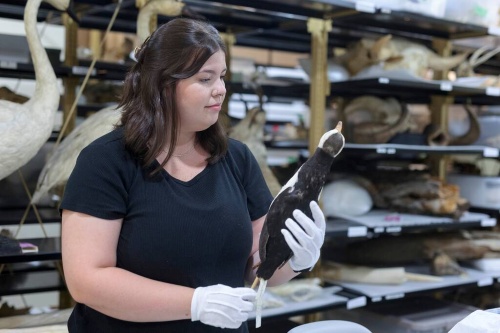
The Department of Biology at USask has active research programs in a diverse range of sub-disciplines. There are three areas of particular focus and strength:
- Structure and function
- Biodiversity and evolution
- Ecology and the environment
The program supports collaboration across the university, including work with the Western College of Veterinary Medicine, the College of Medicine, and the College of Agriculture and Bioresources. It also benefits from strong connections with on‑campus government institutions such as the Prairie and Northern Wildlife Research Centre and the Plant Biotechnology Institute. At the University of Saskatchewan, students can use world‑class research facilities and take part in projects that connect them with local communities.
Research supervisors
Before applying, we recommend contacting a potential supervisor whose research areas align with your interests. Share your academic background and research goals. If they are accepting students, they will instruct you to begin a formal application.
This potential supervisor is currently not accepting supervision requests.
| Name | Research areas |
|---|---|
| Cellular origins of plant shape; Microtubules, cell walls and cell shape; How patterns of cell division, expansion, and differentiation influence the growth and morphology of tissues, organs, and organism | |
| Nonhuman primate ovarian follicle CPA equilibration cell based modeling and optimization; Islet of Langerhans CPA equilibration cell based modeling and optimization; Red blood cell deglycerolization (removal of glycerol from frozen RBC before transfusion).; Bull semen cryopreservation optimization; Tissue-level toxicity and mechanical damage model CPA equilibration optimization; Optimal control of oocyte CPA equilibration; Microfluidic device design | |
| Bacterial communities of ticks; Tick ecology, evolution and population genetics; Population genetics of parasitic insects (fleas and bedbugs); Molecular systematics of parasitic nematodes | |
| Behavioural and cognitive ecology of risk assessment in aquatic animals; How animals change their behaviour, morphology and life history to deal with temporal fluctuations in risk and how the certainty of information, often chemical in nature, alters how prey respond to risk; Effects of metal contamination, turbidity, salinity, dissolved oxygen, UV radiation, ocean acidification, elevated ocean temperature, and coral bleaching on antipredator responses and reproduction; Understanding learning and memory in the context of predation | |
| Animal behaviour; Animal communication; Chemical ecology; Microbial ecology; Host-microbe interactions; Mate choice; Sexual selection; Ornithology | |
| Systemic signaling mechanism for integrating various plant developmental functions; Role for plasmodesmata in transport of plant materials within plants; Role of the plant vascular system in nutrient-stress signaling | |
| Control of breathing; oxygen sensing; songbird migration; high altitude; low oxygen; comparative and integrative physiology; wildfire smoke | |
| Evolutionary ecology; Physiological ecology; Climate change; Mammals; Life history | |
| Comparative endocrinology of vertebrates; Body energy regulation in vertebrates, especially birds and teleosts; Physiology of body growth in vertebrates; Corticosterone physiology in birds; Feathers as an integrated measure of hormone physiology in birds | |
| Ecology and evolution of the Sable Island horse; Ecology, conservation, and management of boreal caribou, moose, wolves, black bears; Scale-dependence in ecology; Indigenous-engaged research in northern ecology; ; | |
| Avian ecotoxicology and conservation; Assessing and mitigating pesticide and other agricultural stressors to Prairie agroecosystems; Captive and field studies to assess contaminant exposure and effects on avian life cycles- particularly migration and reproduction; Freshwater ecotoxicology - direct and indirect effects of chemical stressors on stream and wetland communities and ecosystems; Determining avian exposure using ecophysiological, stable isotope methods and effects of pollutants in wild birds; | |
| Physiological and neurobehavioural effects of contaminants in aquatic organisms; Metal uptake kinetics and bioaccumulation in aquatic organisms; Biomnitoring of industrial metal pollution in Canadian sub-Arctic and high Arctic; Ecological risk assessments of metals in aquatic ecosystems; | |
| Pollen development; pollen cell wall and sporopollenin; embryogenesis and seed development; the biology of organ formation in plants; synchrotron light to advance plant research | |
| Plant nitrogen metabolism; Ureide metabolism ; Nitrogen Fixation; Arginine Metabolism; Plant Abiotic Stress | |
| Snails; mollusca; evo-devo; biomineralization; development; evolution | |
| Cell Biology of Plant-Microbe Interactions; Plant Disease Resistance; Fungal Virulence and Pathogenicity; Pathogenomics |
Visit the Department of Biology's website for a full listing of all faculty members.
Tuition and funding
Funding
Funding is not guaranteed for this program. Scholarships are awarded on a competitive basis based on nominations from supervisors. When you speak with potential supervisors about the research you would like to do, ask about funding opportunities.
Graduate students at USask can receive funding from a variety of sources to support their graduate education.
Tuition and fees
Thesis or project-based master's program
Students in thesis and project-based master's programs are assessed tuition three times a year for as long as they are enrolled in their program.
| Term | Canadian students | International students |
|---|---|---|
| September 1 - December 31, 2026 | ||
| January 1 - April 30, 2027 | ||
| May 1 - August 31, 2027 | ||
| Total per academic year |
Student fees
In addition to tuition above, students also pay fees for programs like health and dental insurance, a bus pass, and other campus services. The amount you need to pay depends on if you are taking classes full time or part time, and if you are on campus or not. The table below assumes you are on campus full-time.
| Fall 2026 | Winter 2027 | Spring 2027 | Summer 2027 | |
|---|---|---|---|---|
| Student fees | $617.36 CAD | $854.96 CAD | $46.75 CAD | $46.75 CAD |
Tuition is typically billed and due in instalments, four times per year. Tuition information is accurate for the current academic year and does not include student fees. For detailed tuition and fees information, visit the official tuition website.
Doctoral program
Doctoral students are assessed tuition three times a year for as long as they are enrolled in their program. Both international and domestic PhD students pay the same rate.
| Term | |
|---|---|
| September 1 - December 31, 2026 | $1,879.00 CAD |
| January 1 - April 30, 2027 | $1,879.00 CAD |
| May 1 - August 31, 2027 | $1,879.00 CAD |
| Total per academic year | $5,637.00 CAD |
Student fees
In addition to tuition above, students also pay fees for programs like health and dental insurance, a bus pass, and other campus services. The amount you need to pay depends on if you are taking classes full time or part time, and if you are on campus or not. The table below assumes you are on campus full-time.
| Fall 2026 | Winter 2027 | Spring 2027 | Summer 2027 | |
|---|---|---|---|---|
| Student fees | $617.36 CAD | $854.96 CAD | $46.75 CAD | $46.75 CAD |
Tuition is typically billed and due in instalments, four times per year. Tuition information is accurate for the current academic year and does not include student fees. For detailed tuition and fees information, visit the official tuition website.
Admission requirements
- Language Proficiency Requirements: Proof of English proficiency may be required for international applicants and for applicants whose first language is not English.
- A cumulative weighted average of at least a 70% (USask grade system equivalent) in the last two years of study (i.e. 60 credit units)
- A four-year honours degree, or equivalent, from a recognized college or university in an academic discipline relevant to the proposed field of study
- Demonstrated ability for independent thought, advanced study, and research
- Language Proficiency Requirements: Proof of English proficiency may be required for international applicants and for applicants whose first language is not English.
- Master's degree, or equivalent, from a recognized university in a relevant academic discipline
- A cumulative weighted average of at least a 70% (USask grade system equivalent) in the last two years of study (i.e. coursework required in master's program)
- Demonstrated ability for independent thought, advanced study, and research
Application process and deadlines
Deadlines and important dates
There is no set deadline for applying to this program. Applications are accepted throughout the year. Scholarship competitions are held in April each year.
Submit an online application
International students - Master's and doctoral students applying for a study permit do not need a Provincial Attestation Letter (PAL). Certificate and Postgraduate Diploma students, as well as Visiting Research students studying over six months, still need a PAL. Review federal international study permit policies before you apply.
Before beginning your online application, be sure that you have carefully reviewed all program information and admission requirements on this page.
During the application, you'll be asked for:
- Personal information such as your name, address, etc.
- Contact information of your three referees
- For your letters of recommendation, two of your referees must be academic contacts, and the third may be academic or professional
- Your complete academic history from all previous post-secondary institutions
The application takes about 30 minutes to complete. You may save your application and return to it later.
At the end of the application, you will need to pay a non-refundable application fee: $125 for domestic students and $145 for international students. Your application will not be processed until payment is received.
Submit required documents
Once you've submitted your online application, you will have access to upload your required documents, and provide the contact information for your references. To do this, go to the "Supplemental Items & Documents" tab in your application.
Preliminary Statement of Marks
- Once you have submitted your application for admission and paid the application fee, you will be required to upload unofficial PDF copies of your academic transcript(s) from each post-secondary institution attended. This requirement will appear as Preliminary Statement of Marks or Additional Prelim. Statement under admission requirements on your Application Summary when you check your application status.
- The uploaded transcript can be an unofficial copy of the transcript issued by the university or college and must include a grading key/legend.
- All pages of a transcript must be uploaded as a single PDF document.
- Uploaded transcripts will be considered unofficial or preliminary. Official copies of your transcripts will be required only for applicants offered admission. This requirement will appear as Post-secondary Transcript under admission requirements on your Application Summary when you check your application status.
- Transcripts in languages other than English must be accompanied by a certified translation.
For students who are required to provide proof of English proficiency:
- Completing a relevant test with the appropriate score is required before the application deadline.
- Tests are valid for 24 months after the testing date and must be valid at the beginning of the student's first term of registration in the graduate program.
- Applicants will be required to upload a PDF copy of any required language test score. Uploaded test scores will be considered unofficial or preliminary.
In addition to the above official documents, please upload the following documents:
- A statement/letter of intent outlining your research interests
- A curriculum vitae or resume
Contact
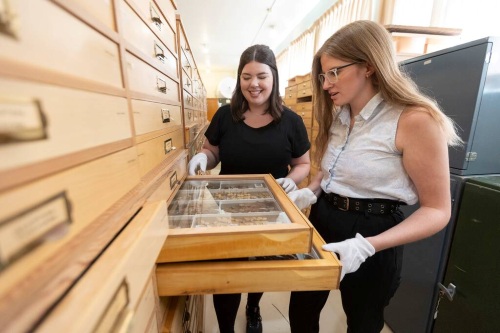
Department of Biology
112 Science Place
University of Saskatchewan
Saskatoon, SK S7N 5E2
Graduate Chair
Dr. Yangdou Wei
Email: yaw792@usask.ca
Graduate Program Coordinator
Audrey Boensch
Email: grad.admin.biology@usask.ca
- Department of Biology
Learn more about the academic unit offering this program - Program and Course Catalogue
To view official admission and program requirements